Rome, The Eternal City, Ancient and Modern
Like many great cities, Rome is a glorious combination of ancient monuments and modern, bustling life. Visitors will find far more to do than a single trip allows, whatever their tastes.
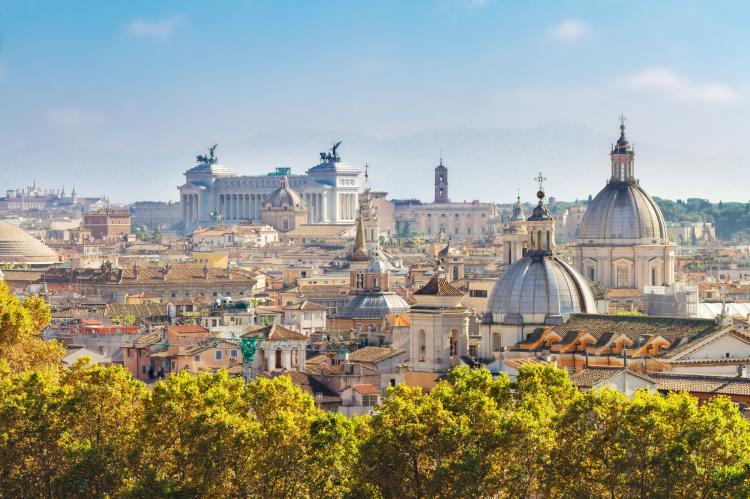
For those who love fine art, Rome is second in Italy perhaps only to Florence. And, as in Florence, that is not only a matter of museums such as the Vatican Museums or the Galleria Borghese. The city itself is an enormous outdoor sculpture garden and architectural treasure trove.
The Trevi Fountain is the most famous of Rome's many outdoor fountains festooned with sea-themed sculpture, but it is far from the only one. The Fountain of the Moor, Neptune's Fountain, La Barcaccia and a dozen others can all compete proudly with that coin-filled masterwork.
Since February 2026, reaching the water's edge at the Trevi requires a ticket. A €2 fee applies to the gated basin area, which is capped at 400 people at a time; residents of Rome, visitors with disabilities and children under five are exempt. The piazza itself remains free, and the view from above is as good as it ever was. Tradition holds that a single coin, thrown over the left shoulder, guarantees a return to the city — the three coins of the 1954 film are a cinematic embellishment.
For those drawn to archaeological sites, and that is a very large percentage of travellers, Rome offers some of the most rewarding examples in the world. The Domus Aurea, the Golden House of Nero, has been under excavation and restoration for decades and remains an active dig.
The gold leaf and ivory that gave the palace its name are long gone. What survives is bare brick vaulting, fragments of fresco and mosaic, and the vast octagonal dining room whose domed ceiling still astonishes. Above it all sits a garden, planted to stop water seeping into the rooms below. Visits are by guided tour only and must be booked well in advance; VR headsets restore the colour and gilding the ruins no longer show, and give some sense of how life looked to this lover of all things Greek.
The Pantheon, the Roman one and not the Panthéon in Paris, is another remarkable survival. Preserved by its conversion into a church in 609, it stands in near-original condition after almost two thousand years, and its engineering continues to astound. Its unreinforced concrete dome is still the largest ever built. Entry has required a ticket since 2023, rising to €7 on 1 July 2026, though admission remains free for under-18s, for residents of Rome and on the first Sunday of each month.
The Roman Forum is equally an architectural delight, even if it cannot boast such pristine preservation. After two centuries of excavation and restoration, however, much of it can be read much as it stood in its heyday. Numerous temples, arches and other structures show the Roman genius for combining the best art with the finest engineering. Elements of the design were not surpassed for more than a thousand years.
No visit to Rome would be complete without the Colosseum. Though severely decayed, enough remains to make it easy to picture gladiators in the arena below rows of seating that held 50,000 spectators or more. The arena floor was removed by nineteenth-century archaeologists, exposing the hypogeum, the warren of tunnels and lift shafts that once delivered fighters and scenery to the stage. It is now open to visitors on certain ticket types, and a project to install a new retractable floor is under way.
The velarium, the canopy that once shaded the crowd, was so large and so advanced in design that debate continues about how it was raised at all. Outside the southern façade, a new travertine plaza opened in early 2026 after four years of work, restoring the approach where spectators once waited to go in.
Rome offers far more than ancient buildings. St Peter's Basilica remains one of the world's finest Renaissance works, inside and out, with later Baroque additions by Maderno and Bernini. The double-shelled dome, designed by Michelangelo and completed after his death by Giacomo della Porta, crowns a basilica that also holds the master's Pietà, in the first chapel of the right-hand aisle.
Just walking around the city can be a delight. The Spanish Steps, the Piazza Navona, the Porta Portese flea market on Sunday mornings and a dozen other outdoor spaces offer shopping, people-watching and sights galore.
Rome holds far more than one trip can take in — which is reason enough to plan a second.