Tourism

The activity of traveling for pleasure.

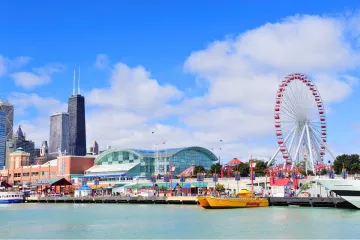
Opened in 1916, rebuilt in 1995, and free to walk onto. The Ferris wheel was replaced in 2016 by the taller enclosed Centennial Wheel, the stained-glass museum closed in 2014, and the shops and restaurants older accounts list have almost all gone.

A French decree of 2008 delimits ten wine basins, which map closely onto the regions a visitor would recognise — and six of them are missing from the list in older accounts. Three French wine landscapes hold World Heritage status: the Jurisdiction of Saint-Emilion, the Climats of Burgundy, and Champagne Hillsides, Houses and Cellars, whose three components amount to an itinerary. The French drink-drive limit is a third lower than in England and Wales, and the allowance for bringing still wine into Great Britain is 18 litres.
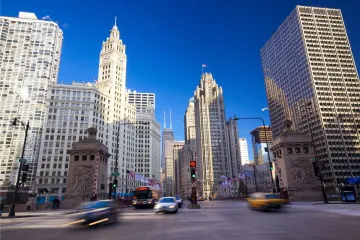
North Michigan Avenue emptied out badly in the early 2020s and is only now refilling, so guides that list shops are useless here. The buildings are the better reason to walk it — and the fire was in 1871, not around 1900.

The seventeenth-century Dutch town, walkable in a morning: Wall Street and the wall it was named for, why the Stock Exchange cannot be visited and never will be again, the two statues that no longer face each other, the memorial pools, the free ferry with the best view in the city, and the Brooklyn Bridge walkway.

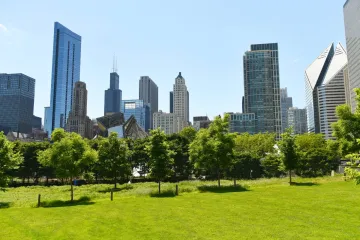
The lakefront is open ground because Montgomery Ward sued the city for twenty years to keep it that way. Millennium Park's Cloud Gate, Crown Fountain and Gehry bandshell, Buckingham Fountain, and two park names that mislead.

What Times Square actually is, why the lights are a planning requirement rather than an accident, and the three things that separate visitors from their money there. Then the theatre district explained properly: what "Broadway" means as a category, where the theatres really are, and the five routes to a ticket in order of usefulness.

Practical groundwork for a first trip from the UK — the ESTA and the previous-travel rule that makes some people ineligible, getting in from the airports, how to pay for the subway now that the MetroCard has gone, reading the Manhattan grid, tipping and sales tax, and when to go.

The island reads as a string of separate villages the grid was laid over, and a neighbourhood a day works far better than a list of scattered sights. What each area is like from Tribeca to Inwood, the distinct characters of Fifth, Madison and Park Avenues, and why zig-zagging across Manhattan wastes a day underground.

Two things almost every account of the zoo still promises are no longer there. The cable car stopped in January 2023 and its replacement is not due until late 2027. And the elephants have gone — the last two left Sydney in April 2025, for a new herd in South Australia rather than for Taronga's own second zoo at Dubbo.

The aquarium older accounts describe has largely ceased to exist — no platypus, no crocodile, no seal, no tiger or lemon shark, and not one of the five zone names in circulation survives. Of the two rescued dugongs, one has died and the other has moved out of the exhibit built for them. One warning about figures: the operator's own website gives three different species counts on three different pages.

How admission really works at the Met, MoMA and the Whitney — including which free evening an overseas visitor can actually use — then the big collections, the medieval monastery reassembled above the Hudson, and the specialist museums worth the detour. With the Guggenheim ramp advice its architect intended and most visitors get backwards.