What is a black hole? A simple cosmic guide
Right now, as you read this, there is a monster lurking in the center of our galaxy. It weighs about four million times more than our Sun, and its gravity is so intense that nothing—not even a beam of light—can escape its grasp.
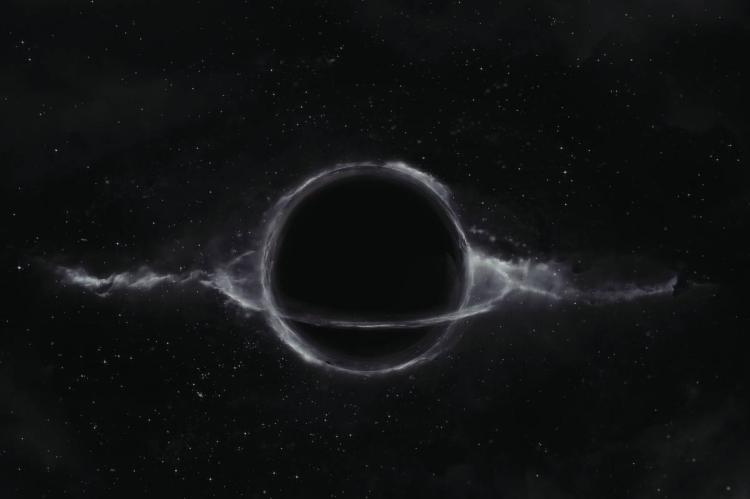
You might wonder why we are so fascinated by something we cannot even see. Black holes sound like something pulled straight out of a science fiction movie, yet they are very real. They shape our universe, anchor our galaxies, and challenge everything we thought we knew about space and time.
If you have ever felt overwhelmed by astrophysics, do not worry. We are going to break down exactly what a black hole is, how it works, and how we actually know they exist. Let’s explore one of the most beautiful and bizarre ideas in physics.
Where Are We in the Universe?
Before we dive into the dark, let’s zoom out and look at the stars.
When you look up at the night sky, almost every pinprick of light you see is a star burning steadily in the vacuum of space. Stars are not just giant, peaceful light bulbs. They are massive nuclear fusion reactors. Fusion just means small atomic nuclei sticking together to make bigger ones, releasing a massive amount of energy in the process.
Inside a star, there is a constant, epic tug-of-war. Gravity is desperately trying to crush the star inward, while the intense heat and energy from nuclear fusion push outward. For billions of years, this creates a perfect balance. The star shines brilliantly, keeping gravity at bay.
But fuel does not last forever. Eventually, a massive star runs out of nuclear fuel. The outward push stops, and gravity finally wins the war. The star collapses under its own immense weight in a fraction of a second, causing a spectacular explosion called a supernova. What gets left behind is the core of our story.
The Core Idea: Crushing Gravity
If the star was massive enough, that leftover core keeps collapsing. It shrinks down past the size of a planet, past the size of a city, until all that massive amount of matter gets packed into a single, infinitely dense point.
That is what a black hole is. It is an enormous amount of matter packed into a remarkably tiny space.
Because all that mass is crammed into such a small area, the gravitational pull becomes unimaginably strong. Think of gravity as a trapdoor. If you are standing on a planet, you need a certain speed to jump fast enough to escape its gravity—we call this the escape velocity. For Earth, a rocket needs to travel about 25,000 miles per hour to break free.
Near a black hole, the gravity is so intense that the escape velocity becomes faster than the speed of light. Since absolutely nothing in the universe can travel faster than light, nothing can get out. Once you cross the invisible boundary surrounding the black hole—called the event horizon—you are stuck forever.
The Cosmic Trampoline
To really picture how this works, let’s use a familiar object. Imagine the universe is a large, stretched-out trampoline. This trampoline represents the fabric of space and time.
If you place a lightweight marble on the trampoline, it creates a tiny dip. If you roll another marble past it, the new marble might slightly curve its path around that little dip. That is how normal gravity works. Planets and stars are like different sized marbles and tennis balls resting on the trampoline.
Now, imagine taking a heavy bowling ball and dropping it in the middle. The trampoline sags deeply. If you roll a marble too close to the bowling ball, it spirals down into the deep hole and cannot climb back out.
A black hole is like taking an incredibly heavy bowling ball and squishing it down to the size of a grain of sand, while keeping all its weight. It creates a pit in the trampoline of space so deep and steep that nothing can climb out of it. It is not a cosmic vacuum cleaner aggressively sucking things up from across the universe; it is just a very deep, steep pit. If you do not wander too close to the edge, you are perfectly safe.
How We Know They Exist
You might be asking a very logical question: if black holes trap all light and are totally invisible, how on earth do we know they are actually out there?
We know this not just from theory, but from the exact pattern of light and behavior we detect in the universe. We catch black holes by observing how they mess with their neighbors.
The Invisible Dance Partner
Sometimes, astronomers look through telescopes and see a star whipping around in a tight circle at incredible speeds. The star appears to be orbiting absolutely nothing. But by measuring the star's speed, scientists can calculate how much mass must be hiding in that dark spot to keep the star from flying away. When the math shows an object weighing as much as ten Suns packed into a tiny, invisible space, a black hole is the only logical answer.
The Tell-Tale Glow
While the black hole itself emits no light, its surroundings are incredibly bright. When a black hole pulls in gas and dust from a nearby star, that material swirls around the drain like water in a bathtub. This swirling disk of doom moves incredibly fast, heating up to millions of degrees due to friction. It glows brightly with X-rays. Telescopes can detect these bright, glowing disks of hot gas acting as a neon sign pointing right to the dark center.
The Historic Photo
In 2019, scientists did the impossible. Using a global network of telescopes acting as one Earth-sized camera, they captured the very first actual image of a black hole’s silhouette in a distant galaxy. We literally have a picture of the glowing ring of hot gas outlining the dark, light-trapping shadow of the black hole itself. It was a stunning confirmation that everything we suspected was right.
Spaghettification: A Weird but True Effect
We cannot talk about black holes without mentioning one of the strangest words in science: spaghettification.
Imagine you decided to fly a spaceship feet-first toward a black hole. Because the gravity gets immensely stronger the closer you get, the pull on your feet would be significantly harder than the pull on your head. This difference in gravity would stretch you out perfectly straight, like a long noodle of spaghetti.
It is a bizarre, mind-boggling concept, but it highlights exactly how extreme the environment around these cosmic objects truly is.
So What? Why Black Holes Matter
Why should you care about invisible pits in space thousands of light-years away?
Without black holes, our universe would look drastically different. Remember that four-million-solar-mass monster sitting in the middle of our Milky Way galaxy? It acts as a massive cosmic anchor. Supermassive black holes exist at the center of almost all large galaxies. They play a crucial role in how galaxies form, how stars are born, and how the universe evolved from a chaotic soup of gas into the beautiful, structured cosmos we live in today.
Furthermore, black holes serve as the ultimate testing ground for our understanding of reality. They are places where the rules of physics are pushed to their absolute limits. By studying them, scientists learn about the fundamental nature of space, time, and gravity. The discoveries we make by studying black holes push human technology forward, eventually leading to advancements here on Earth.
A Universe Full of Wonders
So, the next time you look up at the night sky, remember that the dark patches between the stars are not entirely empty. They hide invisible giants.
Black holes might sound terrifying, but they are a vital, natural part of the cosmos. They remind us that the universe is far wilder, weirder, and more wonderful than we can possibly imagine. We may just be tiny observers on a rock orbiting an ordinary star, but using just our minds and our telescopes, we have managed to uncover the most secretive, powerful objects in the dark. And that is simply amazing.