Baby Showers and Budgets
The host of a baby shower normally pays for it, which makes the budget the first decision rather than an afterthought. It also settles a surprising number of the decisions that follow.
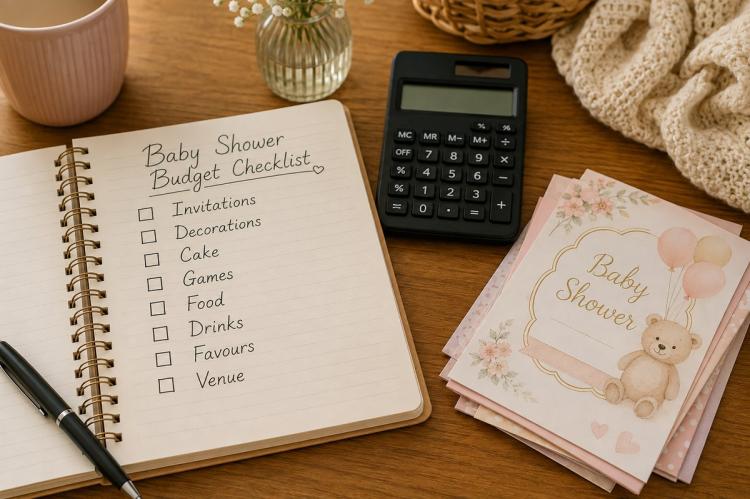
Baby showers have grown. Plenty are still an afternoon at home with a cake and a dozen guests, but others now resemble a small wedding reception, with a hired room, catering, a theme, a photographer and favours for everyone. The second kind is where a budget stops being optional.
The shower is the host's gift
By custom, the host covers the costs. The shower is understood as the host's present to the expectant parents, and the more formal the event, the larger that present becomes. Where the parents are hosting their own shower the question does not arise, but where someone else is hosting, the bill is theirs.
That convention is worth stating plainly before anyone starts choosing venues, because it determines who sets the ceiling.
What a shower costs
Figures vary enormously, and any single average conceals more than it reveals. Two things drive almost all of the variation: whether a venue is hired, and how many people are coming.
In the United Kingdom. A shower held at someone's home, with food prepared by the host and guests, can cost under £100, most of it going on decorations and a cake. Hired rooms move the figure sharply, and region matters more than anything else: venue bookings average around £35 per head in Liverpool, against an average minimum spend of about £700 per event in London. Booked packages in London start at around £123 and most fall between roughly £400 and £1,200 depending on the venue, the numbers and whether food, drink and styling are included. Popular rooms are often reserved three to four weeks ahead.
In the United States. The pattern is the same and the figures track it closely. A small gathering at home for ten to fifteen guests, with home-made food and simple decorations, runs to roughly $100 to $200. Most showers fall between about $300 and $900, covering a modest venue or a home, partly catered food and a bakery cake for twenty to forty guests. Around $1,000 is realistic once thirty to fifty guests, a hired venue and full catering are involved, and roughly $550 is a common minimum once a venue is in the picture at all. Self-catered food works out at about $4 to $8 a head, against $10 or more for the cheapest catering.
The practical conclusion is the same in both countries. There is no standard cost, only the amount the host is willing to spend — and the fastest way to change the total is to change the guest list or drop the hired room.
Where the money goes
A workable budget accounts for the venue or room hire, food and drink, the cake, decorations, invitations and postage, games and any prizes, favours, and anything hired in such as a photographer. Small items are the ones that escape notice: printing, ribbon, table linen, a taxi to carry everything there.
One line drives most of the others. Nearly every cost is per head, so each additional name on the guest list raises the total — often by more than expected once catering, favours and seating are counted together. A budget fixed early is the most effective brake on a guest list that keeps growing, which is why the two are best settled at the same time.
The budget also resolves smaller choices without further debate. Custom-printed invitations or a pack of cards written by hand; a hired room or a front room; a professional photographer or a friend with a good camera. Each has a defensible answer once the ceiling is known.
Sharing the cost
Co-hosting spreads both the work and the expense, and has become the usual arrangement for larger showers. Two methods are common. Co-hosts can divide the categories between them, each paying for what they take on, which is simpler to administer. Or they can each contribute an agreed sum to a shared fund that everything is paid from, which gives a clearer overall picture but needs one person keeping the accounts.
Asking for contributions calls for some care. Offers are easier than requests, and where help is offered there is no reason for the host to feel awkward about accepting it. Where it has to be asked for, the expectant parents are not the people to ask, nor is anyone whose circumstances are tight.
Money is not the only useful contribution. Guests can bring a dish, lend chairs or glassware, make the cake, or give an afternoon to setting up and clearing away. All of it reduces the budget, and all of it should be counted in before the host commits to anything.