Why do you feel like you're falling just as you fall asleep?
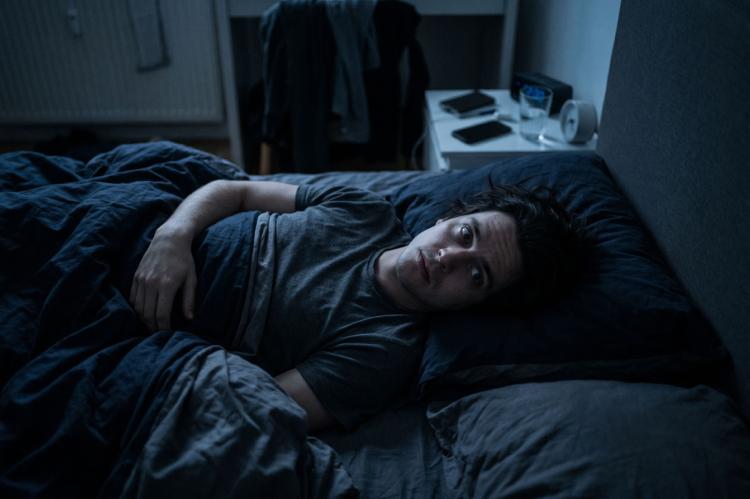
You're almost there. The room has softened, your thoughts have gone vague, and sleep is seconds away. Then your body lurches. Your legs kick. Your arms flinch. Your heart spikes. You're suddenly, completely awake — staring at the ceiling, wondering what just happened.
It happened because your brain panicked. Briefly, needlessly, and in a way that has probably been happening to humans for a very long time.
A pause at the threshold
The sensation has a name: a hypnic jerk, sometimes called a sleep start. It's a sudden, involuntary muscle contraction that jolts you back from the edge of sleep, and research suggests it affects somewhere between 60 and 70 percent of people at some point in their lives. If it's happened to you, you're in very ordinary company.
Falling asleep isn't a switch. It's a gradual handover. As you drift off, your brain moves from alert, active processing into the first stage of sleep — a light, transitional zone where strange things tend to happen. Sounds seem oddly amplified. Half-formed images drift past. Your sense of your own body loosens. Scientists call this in-between state the hypnagogic state, from the Greek words for "sleep" and "guide." It's the passage between two very different kinds of consciousness.
During this transition, your muscles are doing something too. They're letting go. The tension you carry through the day — in your jaw, your shoulders, your legs — begins to drain away as the brain gradually withdraws its signals to the body. For most people, on most nights, this process is seamless. But sometimes the brain seems to misread what's happening.
The false alarm
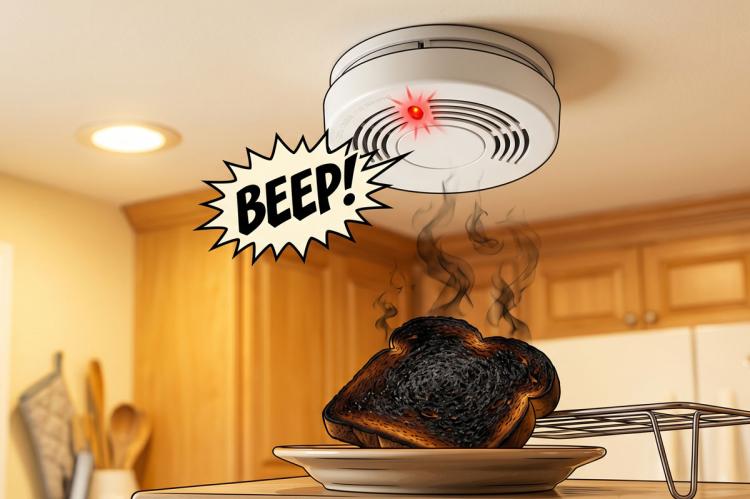
Here is the leading explanation for why hypnic jerks occur. As your body relaxes and the brain begins to lose its grip on your muscles, one part of the brain — the older, faster-acting circuitry that handles reflexes and survival responses — appears to interpret the sudden drop in muscle tension as falling. And falling requires an urgent response. So the brain sends one: a sharp contraction across the major muscle groups, designed to right you before you hit the ground. Except there's no ground. You're lying in bed, perfectly safe. The whole thing is a false alarm.
It's a bit like a smoke detector that goes off when you make toast. The detector is doing exactly what it was built to do — respond quickly and decisively to a signal it recognises as dangerous. It just got the context wrong.
One popular theory goes a step further and suggests this reflex might be ancient. If our earliest ancestors slept in trees, a sudden loss of muscle tone as they drifted off could genuinely have meant they were about to fall. A reflex that jerked them awake in time would have been extremely useful. It's an appealing idea, and it might be part of the story — but scientists are cautious about it. The evolutionary past is difficult to verify, and the reflex probably has multiple contributing causes rather than one tidy origin.
When the handover misfires
What's clearer is why hypnic jerks tend to get worse under certain conditions. They happen more often when the nervous system is already at an elevated state of arousal, which makes the brain's transition into sleep less smooth. Three things in particular shorten the fuse.
| Condition | What it does |
|---|---|
| Sleep deprivation | Keeps arousal levels elevated even as you try to wind down, making the handover harder to complete cleanly. |
| Stress | Maintains heightened activity in the nervous system that regulates alertness, keeping the reflex circuitry on a shorter fuse. |
| Late caffeine | Blocks adenosine, the chemical that builds sleep pressure through the day, so the signal to switch off is weaker than it should be. |
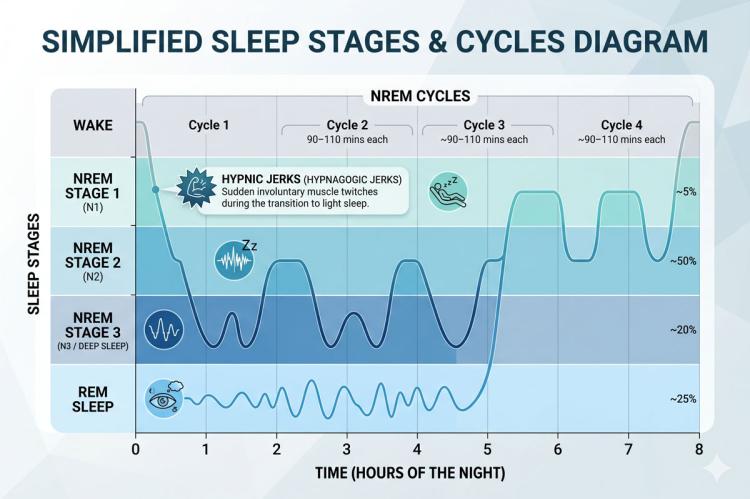
We've been able to study hypnic jerks in some detail thanks to a technique called polysomnography — a method that records brain activity, eye movements, and muscle contractions simultaneously while someone sleeps. These recordings show that the jerk typically occurs right at the top of the descent, in Stage 1 NREM sleep, the very lightest phase of the sleep cycle, and it's accompanied by a visible spike in electrical activity in the muscles. In some cases, the visual system fires briefly too, which is why some people report a flash of imagery — a trip on a kerb, a stumble down a step — right before the jolt. The brain, it turns out, will sometimes generate a quick story to explain what it just did.
What to do with this information
Hypnic jerks are harmless in the vast majority of cases. If they happen occasionally, there's nothing to treat and nothing to worry about. If they're frequent enough to disrupt your sleep night after night, it's worth mentioning to a doctor — not because the jerks themselves are dangerous, but because consistently broken sleep has its own consequences.
The more practical takeaway is simpler: the conditions that make hypnic jerks worse are the same ones that disrupt sleep in general. Cutting off caffeine earlier in the day, managing stress where you can, and keeping a consistent sleep schedule all help the brain make the transition more smoothly. A wound-up nervous system doesn't hand over quietly.
So the next time your body lurches you awake just as you were about to drop off, here's what happened. Your brain, doing its job a fraction too enthusiastically, noticed your muscles going slack and briefly concluded you were falling. It sent a correction. The correction woke you up. And then everything settled, because there was nothing wrong.
Sleep is a surprisingly eventful place to arrive.