What you're really paying for in a leather bag
A few years ago I bought a leather handbag in a sale, reduced from something eye-watering to something merely uncomfortable, and felt quietly clever about it. The label said "genuine leather", which sounded like exactly the sort of reassurance I was paying for. Eighteen months later the surface had begun to flake at the corners, peeling away like sunburnt skin to reveal something grey and fibrous underneath.
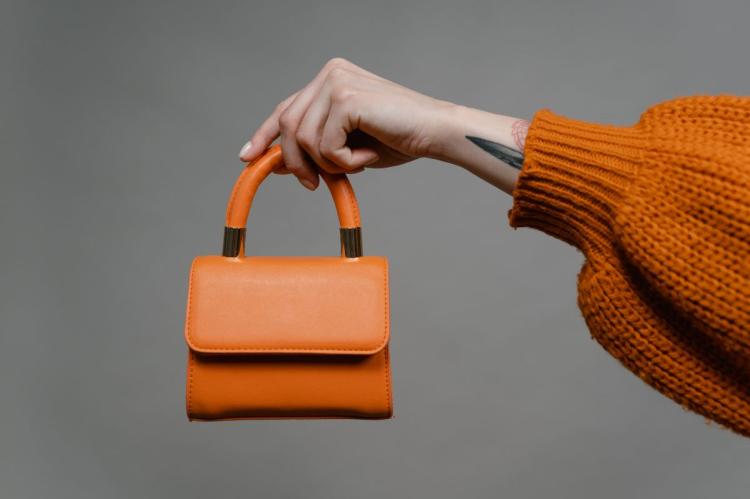
I had been had — not by the shop, particularly, but by my own assumption that a word as solid-sounding as "genuine" meant what I thought it meant. It doesn't. And that single misunderstanding is the most expensive one most of us make when buying leather.
Genuine leather isn't what it sounds like
Here is the reframe that changes everything: "genuine leather" is not a mark of quality. It is, in fact, close to the bottom of the ladder. The word is doing the opposite of what your instinct tells you — it's a technical grade for one of the cheaper, more heavily processed tiers of real hide, dressed up in language that happens to sound like a guarantee.
Leather is graded by which layer of the animal's hide it comes from, and how much it has been sanded, coated and corrected afterwards. Think of a hide as a layer cake. The outer surface, the part that faced the weather during the animal's life, has the densest, most tightly packed fibres. The deeper you slice, the looser and weaker the structure becomes. The grade on the label is really just telling you how far down the cut was made — and the further down, the shorter the life.
The four grades, from best to bin
At the top sits full-grain leather, taken from that outermost layer with its surface left intact. It keeps the hide's natural marks — the odd scar, a freckling of pores, slight variations from panel to panel — and because nothing has been sanded away, it's the strongest of the lot. Cared for properly, a full-grain bag can last decades, and rather than wearing out it develops a patina: that deepening, glossy character that makes old leather look better than new.
Just below is top-grain, cut from the same upper layer but lightly sanded and finished to even out the surface. It's a genuinely good material — supple, uniform, and the workhorse of most well-made mid-range bags. Plenty of well-known fashion houses use it. What it gives up, in exchange for that smooth consistency, is some of full-grain's raw longevity and its capacity to age beautifully; sealed surfaces don't drink in oils the same way.
Then comes genuine leather — the troublemaker. It's made from the lower splits of the hide left over once the better layers have been taken off the top, then heavily processed and often coated with a polymer finish to imitate the look of something finer. It is real leather, technically. But it's the minimum threshold of the term, prone to that plastic-ish feel under the fingers, and it won't develop a patina so much as eventually crack and peel. Which is precisely what mine did.
At the bottom is bonded leather, which is barely leather at all. It's the sawdust of the industry — leather scraps and fibres ground up, mixed with polyurethane glue, pressed onto a backing and embossed to look convincing. Leather content can be as low as a tenth of the material. As the adhesive ages, it flakes and disintegrates, and there's no repairing it. If full-grain is a solid timber table, bonded leather is chipboard with a photo of wood printed on top.
"People hear 'genuine' and think they're being sold the real, proper thing," says Marcus Hale, a leatherworker who has spent fifteen years restoring bags and shoes. "I have to explain that it's almost the cheapest word on the label. If a maker has used full-grain, they'll shout about it — because it cost them money."
Why one leather bag costs ten times as much as another
Grade is the spine of the price, but it isn't the whole story. How the hide was tanned matters enormously too. Roughly 80 to 90 per cent of the world's leather is chrome-tanned, a fast process — a hide can be turned in about a day — that produces soft, colourfast, water-resistant leather at scale. It's why most affordable bags feel pleasant from day one.
The alternative, vegetable tanning, uses natural tannins from tree bark and takes weeks, sometimes months. It's slower, costlier and made by relatively few tanneries now, but it produces firm leather that softens with handling and ages into that coveted patina. Neither is automatically "better" — chrome suits a slouchy everyday tote, veg-tan suits a structured bag you want to keep for twenty years — but the second costs far more to make, and you're paying for that time.
After grade and tanning, the price climbs with the things you can't see at a glance: solid brass hardware rather than plated zinc that wears through, a good-quality zip, stitching that's tight and even, edges that are sealed and painted rather than left raw, and a properly finished lining. And then — there's no point pretending otherwise — there's the brand. A designer name can multiply the price several times over without adding a scrap of durability. A £350 "genuine leather" bag from a famous house is not better made than a £180 full-grain one from a smaller maker. It's just better known.
How to judge a bag in thirty seconds
You don't need Marcus's fifteen years to size up a bag in a shop. A few quick checks tell you most of what you need.
Start with the cut edges, which Marcus calls the most honest part of any bag. "Full-grain and top-grain show a solid, fibrous texture all the way through. Cheap leather shows a layer — a thin printed skin sitting on top of something that looks like cardboard or plastic. The edge always gives it away." Then trust your nose: real, well-tanned leather smells warm and faintly sweet, while lower grades and coatings carry a whiff of chemicals or plastic. Press the surface gently with a thumb — good leather yields a little and springs back, where heavily coated genuine or bonded leather feels stiff and oddly synthetic. Glance at the grain, too: a flawless, perfectly repeating pattern across every panel is the fingerprint of heavy processing, because real hide always has small natural variations. And let price be a final filter. A bag sold as leather for the cost of a takeaway is telling you, quietly, which tier it belongs to.
Looking after it without overdoing it
Buy well and the bag will reward you, but only if you resist two opposite temptations: ignoring it completely, and fussing over it constantly.
Leather's enemies are heat, sunlight and water. Direct sun and a nearby radiator both dry out the natural oils that keep the fibres flexible, which is what leads, eventually, to cracking — so a bag stored on a sunny windowsill or beside the heating is slowly being cooked. Keep it somewhere cool and shaded instead. When you put it away for a while, empty it, stuff it loosely with acid-free tissue to hold its shape, and keep it in a breathable cotton dust bag or an old pillowcase. Never a plastic bag, which traps moisture and invites mould, and don't leave it hanging by the strap for months, which stretches the join out of shape.
Condition it, but sparingly — every few months for a bag in regular use is plenty, and the cue is when the leather starts to look dull or feel dry rather than on any fixed schedule. Over-feeding leather does it no favours. If it gets caught in the rain, blot the water gently with a dry cloth rather than rubbing it in, then let it dry naturally at room temperature; never park it on a radiator or aim a hairdryer at it, as fast heat is exactly what cracks the surface. And one habit worth borrowing from kitchen tables and the like: avoid food oils such as olive oil as a quick-fix conditioner, since they go rancid inside the leather over time.
A last word of reassurance, because it trips people up: patina is not damage. The softening, the deepening colour, the gentle marks of being carried — on good full-grain leather, that's the bag improving, not wearing out. The aim of care isn't to keep it looking box-fresh forever. It's to let it age the way it's meant to.
The sum that makes sense of all this
It's tempting to read all this as an argument for spending more. It isn't, quite. It's an argument for spending knowingly. A £40 bonded-leather bag that flakes within two years costs you £20 a year and a small disappointment each time you look at it. A £200 full-grain one you carry for a decade costs you £20 a year too — and gets better the whole time. Once you do the division, the expensive bag is often the cheaper one. The trick was never to spend lavishly. It was to read the label, check the edges, and stop being reassured by a word that was only ever marketing.
This article is for general information. Specific care needs vary by leather type and finish — for valuable or delicate items, follow the maker's care instructions or consult a professional leather specialist, and test any product on a hidden area first.