Tai Chi walking: turning an everyday autopilot into a slow-motion superpower
Have you ever noticed that most walking happens without you “being there”? You’re already thinking about your next message, your next class, your next meeting… and somehow your legs just do the job.
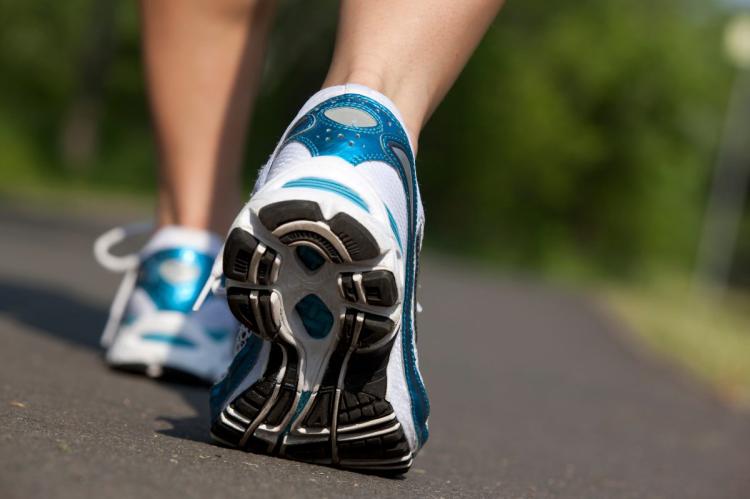
Tai Chi walking flips that around. It takes something ordinary (one step) and turns it into a small, moving experiment in balance, attention, and joint-friendly strength.
Zoom out: why walking is weirder than it feels
In normal walking, your body often uses a bit of momentum. You lean forward, catch yourself, and repeat. It’s efficient. It’s also a tiny controlled “fall” that your muscles constantly rescue.
Tai Chi walking (sometimes called Tai Chi gait or walking qigong) is different. Instead of “falling and catching,” you aim for controlled placement: you only commit your weight once the new foot is fully planted and stable.
That sounds like a small change. But it shifts what your brain pays attention to, how your muscles work, and how your joints absorb force.
The core idea, in simple words
Tai Chi walking is slow, mindful walking where you separate each step into two clear phases:
- One leg is full: it holds 100% of your weight.
- The other leg is empty: it carries 0% of your weight and moves freely.
You keep those roles clean. No mushy “half-on, half-off” moments.
A clear analogy you can feel instantly
Imagine you’re carrying a full mug of coffee and you really don’t want it to spill.
You wouldn’t stomp forward and hope for the best.
You’d place your foot, feel the floor, then move your weight—smoothly.
That’s Tai Chi walking. It’s walking as if every step is a careful pour.
What your body is practicing (without needing fancy words)
A few key ideas make this work:
1) “Rooting” (a practical kind of groundedness)
You soften the knees slightly instead of locking them. That lowers your center of gravity and asks your thighs and glutes to help stabilize you.
2) The heel-to-toe roll (like a quiet cat step)
Rather than a hard heel strike, you touch down softly and roll the foot from heel → arch → ball → toes. This increases gentle contact with the ground and gives your brain richer “balance information” from the soles of your feet.
3) No “committing” until the foot is safe
You place the foot first, like you’re testing thin ice, and only then do you transfer weight.
How we know it helps (in the real, non-magical sense)
Researchers describe Tai Chi walking as a way to expand your usable “stability zone” - your ability to control where your weight is and recover if you slip.
It’s also mentally demanding in a good way. Normal walking is mostly automatic. Tai Chi walking asks for conscious control—your attention is actively steering the step. That can act like a gentle workout for focus and coordination.
And because the knees stay soft and the stepping is low-impact, it’s often used in contexts where people want to move without pounding the joints, including osteoarthritis-friendly movement approaches.
(Small safety note: this is not medical advice. If you have significant balance issues, dizziness, or joint pain, it’s smart to check with a clinician or qualified instructor before practicing.)
The routine: “3-Step Reset” Tai Chi walking (5 minutes, small space)
This routine is built for a hallway, office, or living room, enough space for three small steps forward and back.
Minute 0–1: Setup — find your “roots”
- Stand with feet about shoulder-width.
- Unlock your knees (a small bend).
- Relax your jaw. Let your shoulders drop away from your ears.
- Picture your feet “melting” into the floor, growing roots downward.
- Take 3 slow breaths: in through the nose, out through the mouth.
Aim: you’re not bracing. You’re settling.
Minute 1–3: Forward walk — “pour the weight”
You’ll take 3 slow steps forward, pause, then turn and come back.
For each step:
- Shift right: move 100% of your weight into the right leg so the left leg feels empty.
- Step: extend the left heel forward without shifting weight yet. Hover, then touch down softly (thin-ice test).
- Pour: slowly transfer weight from back leg to front leg. Feel the foot roll heel → arch → toes.
- Arrive: once the left leg holds 100%, bring the right foot up parallel (or ready to step through).
Repeat until you’ve done 3 steps forward. Turn around slowly, then do 3 steps back to where you started.
Key focus: if someone froze time mid-step, you should feel stable—not like you’re falling into the next step.
Minute 3–4: Backward walk — wake up new balance circuits
Backward stepping changes the pattern. It’s also a great way to notice how much you rely on habit.
For each backward step:
- Stand parallel. Shift 100% weight to the left leg.
- Reach the right foot back and touch toes first (not heel).
- Carefully lower the heel.
- “Pour” weight back into the right foot until the left becomes light.
Do 3 steps backward, then 3 steps forward to return.
Minute 4–5: Closing — settle the system
- Return to shoulder-width stance.
- Inhale as you raise your arms out and up (palms up).
- Exhale as you lower your hands down the centerline (palms down), like pressing a floating ball into water.
- Rest hands over the belly button. Stand quietly for 10 seconds.
Tiny upgrades that make it feel “Tai Chi” fast
These cues are deceptively powerful:
- The teacup rule: keep your head level. No bobbing.
- Soft gaze: look ahead, not down at your feet (looking down can reduce balance).
- Short steps: keep the stride under your hips, not reaching far ahead.
- Nose and navel together: avoid leaning forward; let the whole body shift as one unit.
- Breath sync (optional): once the footwork feels smooth, try inhaling on the lift and exhaling on the step.
So what? Why this matters
Tai Chi walking is a quiet way to train two things we all use every day: balance and attention. It’s also a reminder that “fitness” isn’t only about going harder—it can be about moving smarter, with more control and less wasted impact.
Quick recap
Normal walking often rides momentum. Tai Chi walking replaces momentum with deliberate control: one leg full, one leg empty, and weight poured only after the foot is safely placed