The number on the bottom of a container is a recycling code, not a safety rating. The concerns are hormonal rather than cancer. Heat drives most of what leaches. And two expert committees looking at the same evidence on bisphenol A reached conclusions orders of magnitude apart.
Plastic in the kitchen is a subject where the writing is almost always either dismissive or frightening, and where the actual position has changed a great deal in the past few years — in the direction of more caution, not less.
The short version: a few specific chemicals used in plastics are genuinely under regulatory restriction, the reason is hormonal rather than cancer, heat is what drives most of what leaches, and the number on the bottom of a container is not a safety rating.
The recycling number does not mean what people think
The triangle with a number inside is a resin identification code. It says which plastic the item is made of, for the benefit of whoever sorts it. It is not a safety grade, and reading it as one is the commonest mistake on this subject.
- 1 — PET. Drinks bottles, ready-meal trays. Stable in normal use.
- 2 — HDPE. Milk bottles, detergent bottles, some toys. Stable and widely recycled.
- 3 — PVC. Rigid in pipes and window frames; the flexible version contains plasticisers, discussed below.
- 4 — LDPE. Carrier bags, cling film, squeezable bottles.
- 5 — PP. Yogurt pots, tubs, microwaveable containers, straws. A high melting point, which is why it is used for things that get hot.
- 6 — PS. Polystyrene: disposable cups, takeaway boxes, packing material.
- 7 — Other. A catch-all. It includes polycarbonate, which is the bisphenol A one, and also plant-based bioplastics, which are unrelated. A 7 on the bottom tells a shopper essentially nothing.
So the code is useful for recycling and close to useless as a safety signal. What matters is which chemical is in the particular item and what is being done to it.
Bisphenol A, and why the regulators are arguing
BPA is used to make polycarbonate plastic and the linings of food and drink tins. It is an endocrine disrupter — a substance that interferes with hormone signalling — and the concerns attached to it are about the hormonal, reproductive and immune systems. It is not a carcinogen, and writing that describes baby bottles as harbouring carcinogens has the mechanism wrong as well as the facts.
On baby bottles specifically: BPA has been banned in them across the EU and the UK since 2011. Warnings about BPA in baby bottles are fifteen years out of date, and repeating them crowds out the things that are still true.
What has happened since is more interesting, and it is a genuine disagreement between serious bodies.
In 2023 the European Food Safety Authority re-evaluated BPA and cut its tolerable daily intake by a factor of around twenty thousand, concluding that dietary exposure across the European population is unsafe. That is one of the largest revisions of its kind, and it was based on effects on the immune system.
The UK's Committee on Toxicity reviewed the same evidence and did not agree with EFSA's reasoning, arriving at a figure very much higher — which is to say far less restrictive. So two expert committees, looking at the same studies, reached conclusions orders of magnitude apart. That is worth knowing rather than hiding, because it is the honest state of the question.
What both jurisdictions then did is the part that matters in practice. The EU adopted a ban on BPA in food contact materials, with items placed on the market after July 2026 prohibited and existing stock permitted to sell through to July 2027. The UK's Food Standards Agency consulted on its own ban through late 2025 and has confirmed that BPA and its analogues will be banned in food contact materials in Great Britain, with the timing to be announced.
So the regulators disagree about how much exposure matters and agree enough to be removing it. Anyone who wants to reduce their own exposure ahead of the law is making a reasonable choice; anyone who concludes that current levels are not worth losing sleep over can point at a UK committee that broadly agrees. Both positions are defensible, which is an unsatisfying answer and the true one.
"BPA-free" is less reassuring than it looks
This is the single most useful thing on the label question.
When BPA came under pressure, manufacturers substituted closely related compounds — bisphenol S and bisphenol F among them. They are structurally similar, and the evidence that they are meaningfully safer is thin. The phenomenon has a name in regulatory circles: regrettable substitution.
It is precisely why the UK ban covers BPA's analogues rather than BPA alone, and why a "BPA-free" sticker means only that one specific compound is absent. For a container that will hold hot or fatty food, glass, stainless steel or ceramic sidesteps the question entirely.
Phthalates
Phthalates are plasticisers — they make rigid PVC flexible, which is what turns it into shower curtains, flooring, cable sheathing and soft toys. They are not chemically bound into the plastic, so they migrate out over time, and they migrate more readily into fatty foods.
Several are classed as endocrine disrupters, with concerns centred on reproductive development. The response has been restriction rather than prohibition: a number of phthalates have been restricted in toys and childcare articles in the EU and UK for years, and their use in cosmetics is limited.
Phthalates also turn up as fragrance carriers in cosmetics and household products, which is a larger source of exposure for many people than food packaging.
Polystyrene
Styrene, the building block of polystyrene, is classified by the International Agency for Research on Cancer as probably carcinogenic to humans. That classification rests mainly on studies of people exposed occupationally — in manufacturing, at concentrations unlike anything a takeaway cup produces.
Migration from polystyrene food containers is low, and increases with heat and with fat. Stating flatly that disposable dinnerware "is linked to cancer" misrepresents what the classification means, which does no favours to anyone trying to work out what to care about.
The sensible practical line: polystyrene is not the container to microwave or to put hot oily food into, and a cold drink from a disposable cup is not a health event.
Microplastics, stated carefully
This is the newest part of the subject and the one most prone to overstatement in both directions.
What is established: micro- and nanoplastic particles are widespread in the environment and have been detected in human tissue — blood, liver, kidney, placenta, brain and semen among them. The main routes in are swallowing and breathing.
What is not established: that they cause harm in people. Associations have been reported — plastic particles in artery plaque alongside a substantially raised risk of cardiovascular events, higher inflammatory markers in people with more particles in the blood, higher levels in people with dementia — and all of these are observational, with causation unproven and other explanations available. Inflammation, oxidative stress and hormonal interference are all biologically plausible routes to harm, which is a reason to keep looking rather than a finding.
There is also a measurement problem worth knowing about: current methods struggle below about twenty micrometres, and the smallest particles are both the hardest to detect and probably the most relevant.
One formulation is worth quoting carefully, because it gets mangled in both directions. There is insufficient evidence to say for certain that any level of exposure is safe. That is not the same statement as "no level is safe" — it is a statement about the state of knowledge, not about the particles.
What actually reduces exposure
Almost all the useful advice follows from one fact: heat drives migration, and so does fat, and so does physical damage to the plastic.
- Reheat in glass or ceramic, not plastic. This is the single most effective change and the easiest.
- Do not microwave anything not intended for it — takeaway containers, margarine tubs, ready-meal trays meant for a single oven pass, cling film in direct contact with food.
- Throw out scratched, cracked, cloudy or sticky containers. Surface damage substantially increases what comes out of them, and a container that has gone cloudy has aged.
- Let food cool before it goes into plastic, rather than decanting it hot.
- Hand-wash the plastic worth keeping. Repeated hot dishwasher cycles age it faster than anything else in a kitchen.
- Do not leave drinks bottles in a hot car, or in direct sun.
- Single-use bottles are single-use for a practical reason as much as a chemical one: the threads and interior scratch, and they are difficult to clean properly. A refillable stainless steel or glass bottle is better on every count.
- Tinned food linings have been among the larger dietary sources of BPA. Variety across fresh, frozen, dried and tinned does more than any trick with rinsing.
- Tap water rather than bottled, which carries more plastic particles as well as being cheaper and better for the environment.
- Ventilate and dust, since household dust is a meaningful route for both phthalates and plastic particles.
The framing that works is reduction rather than elimination. A plastic-free kitchen is not achievable for most people and is not what the evidence asks for. Not heating food in plastic is achievable by nearly everyone and addresses most of it.
Where the case for caution is strongest
Pregnancy, infancy and early childhood, which is where regulators concentrate and where the precautionary argument is on firmest ground — hormonal systems under development are the plausible point of vulnerability.
Practically: feeding equipment designed for the purpose, which has not contained BPA for well over a decade; not heating formula or milk in plastic and not microwaving bottles, which is standard advice anyway because of hot spots; glass or stainless steel for storing and warming; and soft plastic toys that meet current standards rather than old or unlabelled ones.
Three claims to retire
Freezing water bottles releases dioxins. This is the most durable plastic myth there is, and it is false. Dioxins are not present in PET, are not a product of freezing, and freezing slows chemical migration rather than increasing it. The claim traces back to a chain email.
PVC should be avoided like the plague. Rigid PVC in a window frame or a drainpipe is inert and nobody eats off it. The concern attaches to the plasticisers in flexible PVC and to what happens when PVC is burned, which is a matter for waste policy rather than for a shopper.
Every piece of plastic ever made still exists. A great deal of it does, which is bad enough to say accurately. Substantial quantities have been incinerated, and mass production only began in the 1950s, so the true figure is smaller and more recent than the slogan implies. Exaggerated statistics give the people who want to dismiss the whole subject something easy to knock down.
The environmental side, briefly
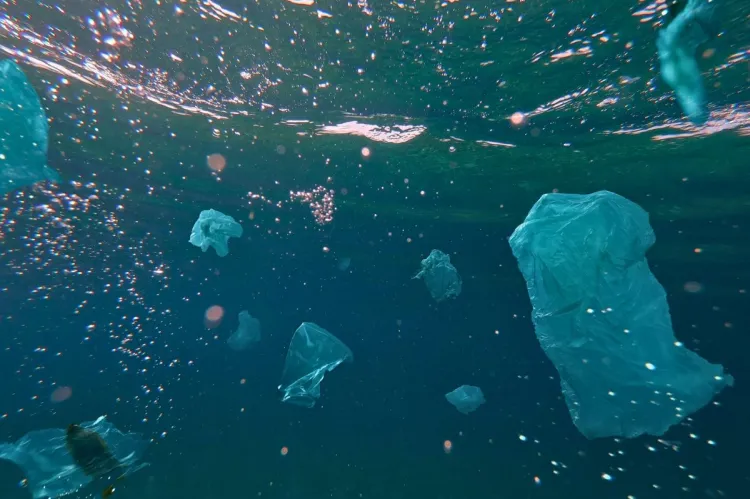
This belongs in a different section but cannot sensibly be left out. Plastic persists for a very long time, most of what is put in a recycling bin is not ultimately recycled, and the quantity entering the oceans each year is large and rising. None of that is affected by which container somebody reheats their lunch in, and reducing what is bought in the first place does far more than sorting it correctly afterwards.
It is worth keeping the two questions apart. The health question is about a handful of specific chemicals and about heat. The environmental question is about volume. They point in roughly the same direction, which is convenient, but they are not the same argument and the stronger one should not have to lean on the weaker.
Changed