Kew is two organisations on one site. The Royal Botanic Gardens runs the landscape, the glasshouses and the science; Historic Royal Palaces runs the palace, the Royal Kitchens, Queen Charlotte's Cottage and the Great Pagoda inside its walls. The distinction matters, because the gardens are open all year and the palace is not. It matters for the glasshouses too: the Waterlily House has been closed since February 2026, and the Palm House is due to close from 2027 for a restoration with no published reopening date.
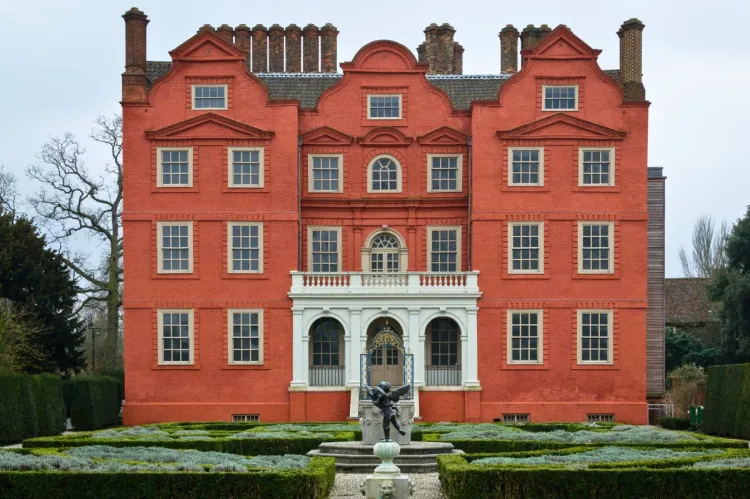
Two organisations, one site
Older accounts treat "Kew Palace and Gardens" as a single attraction. It is not. The Royal Botanic Gardens, Kew is a public body sponsored by Defra, which owns and runs the landscape, the glasshouses, the collections and the science. Historic Royal Palaces is an independent charity, and it runs Kew Palace, the Royal Kitchens, Queen Charlotte's Cottage and the Great Pagoda inside Kew's walls.
In practice that means a garden ticket is what gets a visitor through the gates, after which the palace, the Royal Kitchens and the cottage are included; the Great Pagoda needs its own timed ticket on top, and a short tour of the palace's hidden spaces costs extra again. The palace opens for a spring-to-autumn season and is shut over the winter. Queen Charlotte's Cottage opens at weekends and on bank holidays only, and depends on volunteers being available, so it should not be promised to anyone.
Older accounts also omit the status altogether: the whole site was inscribed as a UNESCO World Heritage Site in July 2003, under three cultural criteria, with a property of 132 hectares and a buffer zone of 350. The inscription covers the historic designed landscape together with the Palm House, the Waterlily House, the Temperate House, the Treetop Walkway, the Great Pagoda, the palace, the two art galleries and the Herbarium and Fungarium. The site is also Grade I on the Register of Parks and Gardens.
The house, and the merchant who was not Dutch
Samuel Fortrey built the house in 1631, demolishing what stood above a surviving sixteenth-century undercroft; the date and his initials are carved over the entrance. It is Grade I listed.
He was not a Dutch merchant. Fortrey's family came from near Lille, and he is properly described as a London merchant of Flemish descent. The mistaken belief that he was Dutch, helped along by the house's Dutch-style gables, is precisely what gave the building its long-standing nickname — the Dutch House. The error in older accounts is the source of the name they are trying to explain.
When the name changed to Kew Palace cannot be established, and the 1827 of older accounts should not be printed. What is on record is that between about 1800 and 1828 the house was called the Old Palace or the Old Red House, while a separate Castellated Palace, begun around 1802, was the New Palace. The likely mechanism is that the Dutch House inherited the bare name once the Castellated Palace was demolished in 1827 and 1828 — but that is inference, not a sourced fact.
The lease, which was not from the Fortreys
Older accounts have Fortrey's descendants leasing the house to Queen Caroline in 1728. The Fortreys had sold up thirty years earlier: William Fortrey passed the house to Sir Richard Levett in 1697, and it was from the Levett family that George III bought the freehold on 13 October 1781, for twenty thousand pounds.
The 1728 lease itself is real. Caroline of Ansbach, consort of George II — not Caroline of Brunswick — took the Dutch House in 1728 to house her three eldest daughters, Anne, Amelia and Caroline. The county history says only that she took a long lease.
The ninety-nine-year term and the much-quoted rent of a hundred pounds and a fat doe appear in no primary or institutional source. They survive only in recycled copy, and there is a tell: ninety-nine years from 1728 ends in 1827, which is the same unsourced number as the supposed name change. Both almost certainly come from one garbled secondary account, and both should go.
The restoration
The ten-year project of older accounts is one of the very few numbers that survives checking. The house closed in 1996, and the work is described by its architects as the final phase of an intensive ten-year restoration programme with a construction value of about six and a half million pounds, funded by the Heritage Lottery Fund, Historic Royal Palaces and private donors. The palace reopened to the public on 27 April 2006, days after a dinner marking the Queen's eightieth birthday.
Two adjustments. The brickwork is Flemish bond, which is correct, but calling it unique is indefensible — Flemish bond is common in English brickwork from the seventeenth century onwards. What is genuinely remarkable is the cut and moulded brickwork of the classical Orders on the seven-bay entrance front. Original pigments found behind a rainwater hopper informed a limewash scheme applied in 1999.
And the dimensions should be dropped. No official source publishes a footprint for the building; Historic England gives only a square red brick mansion of three storeys with dormers. It is enough to say it is the smallest of the royal palaces.
What is inside, and which floor is which
There is no single 1804 period, and the interpretation is layered rather than set to one date. An 1804 wallpaper sample did inform part of the re-presentation, which is probably where the date comes from.
- The Royal Kitchens are presented as they were in 1818. They were a separate project and reopened in 2012.
- Princess Elizabeth's bedroom on the first floor is a recreation worked up from household accounts.
- The bedrooms of Princesses Augusta and Amelia on the floor above are the unrestored section, conserved as found, keeping traces of original green verditer wallpaper, early nineteenth-century paint and a Gothic fireplace that Amelia asked for.
- Queen Charlotte died at the house in November 1818, in a room on the first floor.
The floor numbering in older accounts is a trap. In British usage the second floor is the top floor, which is where the conserved bedrooms are; a reader taking "second floor" in the American sense lands on the recreated rooms instead, which are the opposite of untouched. And "very much as it was 200 years ago" overstates even the top floor, since those rooms were opened to the public for the first time in the 2006 project and are a deliberate conservation presentation rather than a survival.
"Secret rooms" is not the language anyone at Kew uses. The real thing is the hidden spaces tour, a short guided visit to the attics, where carved witch marks can be found on the roof beams, the staff areas, and the Tudor undercroft — the only surviving fabric of the earlier house on the site. There is no lift and the stairs are steep.
The doll's house is misdescribed too. It is a wooden Georgian baby house made around 1780 for George III's daughters, and its furniture and decoration — some of it made by the princesses themselves — survive largely intact rather than restored. It left the family, ended up in Weymouth, and was bought back in 2004. It stands in the King's Breakfast Room on the ground floor, and its finishes helped restorers match colours elsewhere in the house.
The fifteen children, born between 1762 and 1783, are correct.
Opened by order of Queen Victoria
This claim substantially survives. Victoria gave Queen Charlotte's Cottage and its grounds to the nation in 1898 to mark her diamond jubilee, on condition the grounds be left uncultivated, and the Dutch House was opened to visitors by her order at about the same time — sources give 1898 or 1899. The closure that interrupted it was specifically 1996 to 2006, which is worth stating rather than leaving as an interval.
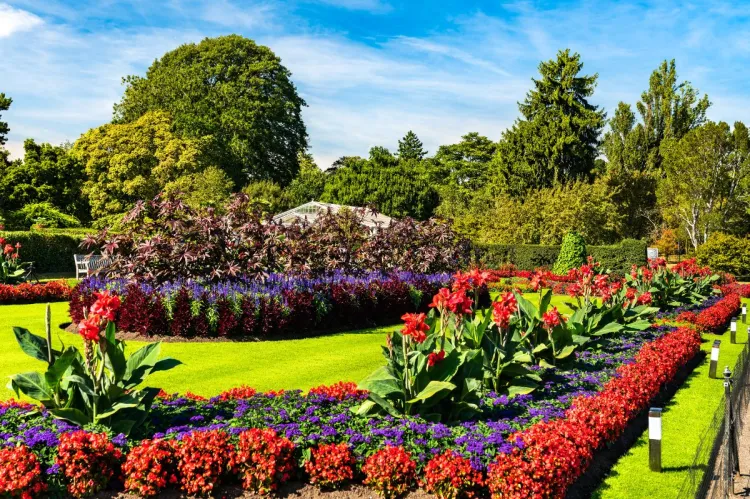
The gardens: 1759, not 1751
Kew's own account gives 1759, when Princess Augusta, mother of George III, established a nine-acre botanic garden within the pleasure grounds. The acreage in older accounts is right and the date is not: 1751 is the year Frederick, Prince of Wales died, and Augusta enlarged the gardens after his death, which is the likely confusion. A third date belongs in any account: 1840, when Kew passed from the Crown to government and became a national botanic garden.
It now covers about 130 hectares, some 320 acres. Published figures vary between 121 and 132 hectares depending on what is being measured, so the number is best given as approximate.
The 12 per cent of the world's known plant species is garbled, and there is no such figure. Kew's own claims are at genus level and much higher: the collections represent approximately 95 per cent of vascular plant genera and 60 per cent of known fungal genera. The nearest species-level figure belongs to the seed bank, which holds at least 16 per cent of the world's bankable plant species.
The real numbers are better than the invented one:
- Living collection: over 27,000 taxa across more than 68,000 accessions, with a Guinness record awarded in September 2021 for the largest collection of living plants at a single-site botanic garden. The arboretum holds about 11,000 trees.
- Herbarium: around seven million preserved vascular plant specimens, built up over some 170 years, alongside a fungarium. Digitisation of both was completed in March 2026, giving access to over 7.4 million records.
- The Millennium Seed Bank is at Wakehurst in Sussex, not at Kew — a distinction worth keeping. It opened in November 2000 and holds just under 103,000 collections, nearly 2.5 billion seeds of over 40,000 species, stored at minus twenty degrees and germination-tested every ten years, with partnerships across a hundred countries and territories and over 98 per cent of Britain's native bankable species banked.
The Great Pagoda
Kew calls it the Great Pagoda, not the Chinese Pagoda. It is Sir William Chambers's, completed in 1762 as a gift for Princess Augusta, though some sources give 1761 and the discrepancy probably reflects start against completion. It is Grade I listed, fifty metres and ten storeys, with 253 steps to the viewing gallery.
The dragons are the story older accounts miss entirely. Eighty gilded wooden dragons originally stood on the roofs and had gone by 1784. Kew's view is that they simply rotted, and both Kew and the general record dismiss the persistent rumour that they were solid gold and sold to pay royal gambling debts. They returned in 2018: a master dragon was carved in African cedar by Tim Crawley and eight in all were carved in wood for the lowest roof, while the remaining 72 were modelled digitally and made in nylon, because wooden ones would have been too heavy for the upper roofs. The building closed for repairs in 2006 and reopened in 2018 at a cost of about five million pounds.
The Palm House, and what is about to happen to it
It is Decimus Burton's, with the Dublin iron-maker Richard Turner, built from 1844 to 1848 and Grade I listed. Historic England gives it as 362 feet long and 67 feet high at the middle, and calls it one of the boldest pieces of nineteenth-century functionalism in existence. The wrought-iron claim in older accounts should be softened: no institutional source supports a flat "first", and "among the earliest large-scale structural uses of wrought iron" is as far as the record goes.
The count of six large Victorian greenhouses cannot be sourced and should go. Three Victorian glasshouses survive — the Palm House of 1848, the Waterlily House of 1852 and the Temperate House. The others on site are either pre-Victorian, like the Nash Conservatory of the 1830s, or modern. Kew's word, and the British one, is glasshouse.
Now the part no older account can contain. A project of about sixty million pounds will conserve the Palm House and the Waterlily House and make them net zero, replacing heating, electrical and watering systems. Roughly a third of the money was raised by 2026; designs were finalised and a planning application submitted in July 2025.
- The Waterlily House closed in February 2026, funded by a five-million-pound gift, with reopening expected in 2027. The waterlily display has moved to the Princess of Wales Conservatory in the meantime.
- The Palm House is still open and is due to close from 2027, with a build phase of about four years. No reopening date has been published, and the work is explicitly subject to funding, so any date would be a guess.
- The plants are already moving. Propagation by cuttings and air layering began in 2024, and the collection is being transferred to a temporary glasshouse behind the Palm House; the largest fast-growing palms are felled and replanted periodically rather than moved.
The Crystal Palace was never here
Older accounts place the Crystal Palace near Kew. It was built in Hyde Park for the Great Exhibition of 1851, dismantled and re-erected at Sydenham in south-east London, and destroyed by fire on 30 November 1936. It was never at Kew, is not near Kew in any sense, and has not existed for ninety years.
The likeliest confusion is with the Palm House itself, an iron-and-glass structure of the same decade by the same designers, routinely compared to the Crystal Palace in Victorian and modern writing, or with the Temperate House, the world's largest surviving Victorian glasshouse — a phrase easily mangled into a reference to the most famous lost one. There is also a real exhibition link buried here: Kew's Timber Museum opened in 1863 to house woods from the 1862 London International Exhibition, a different exhibition eleven years later.
The Temperate House
Older accounts give 1860, and the real answer is a range. It was begun around 1859 or 1860, opened in 1863, and not completed until 1899 — the wings came decades after the centre block, which is more interesting than any single date. The architect is Decimus Burton.
"Twice the size of the Palm House" is correct: 4,880 square metres of floor area, rising 19 metres, and it is described as the largest Victorian glasshouse in the world. It was restored between 2013 and 2018 at a total cost of forty-one million pounds, architects Donald Insall Associates, and reopened on 5 May 2018 with about ten thousand plants of fifteen hundred species, some five hundred of which had spent the works in a temporary nursery. Its heating moves to electric heat pumps from April 2026.
The Grass Garden, and the museum that no longer exists
The Grass Garden is still there, created in the early 1980s and redesigned in the 1990s, but the figure is wrong. Kew's own page gives around 300 species; another widely cited source gives over 580. Neither matches the 600 varieties of older accounts, and the conflict cannot be resolved from published material, so Kew's own number is the one to use. "Botanical museum" is also the wrong term for a botanic garden.
The Wood Museum is a real historical name attached to nothing a visitor can see. Museum No. 3, the Timber Museum, opened in 1863 in Princess Augusta's Orangery, a Chambers building of 1761, and closed in 1958 when the director wanted the Orangery back for its original purpose. Museum No. 4, the Museum of British Forestry, opened in 1910, and after the 1958 closures it was known simply as the Wood Museum. By 1987 all four Kew museums had closed; the timber went into a purpose-built research facility and became part of the Economic Botany Collection, which is a research collection and not a display. Nothing in the record connects any of it with explaining how paper is made.
What stands on those sites now:
- Museum No. 1, the Museum of Economic Botany, built in 1856 by Decimus Burton as Kew's first purpose-built museum, is now a restaurant, with economic-botany artefacts relating to food and drink displayed inside it.
- The Orangery is a café and events space.
- The Marianne North Gallery, opened in 1882, holds 832 of her paintings and reopened in October 2009 after restoration.
- The Shirley Sherwood Gallery of Botanical Art, of 2008, is Kew's main exhibition space.
Rubber: a staging post, not a plantation
In 1876 Henry Wickham collected about 70,000 seeds of Hevea brasiliensis near Santarém in Brazil. They reached Kew on 15 June 1876, and within a few weeks about 2,700 had germinated. The seedlings were sent on to Ceylon, Malaya, Singapore, Africa and Batavia, seeding the Asian rubber industry.
So Kew was the germination and distribution point, not the place of cultivation, and the claim in older accounts that the first successful cultivation outside South America happened on the grounds is wrong. The word "smuggled", which attaches itself to this story, is also contested: there was no Brazilian law forbidding seed export, but an export licence was required, and Wickham obtained one under false pretences at Belém by declaring the seeds as academic specimens. His later accounts of gunboats and narrow escapes appear embellished. "Deceptive" is defensible; "illegal" is not.
Kew's own position on this part of its history is on the record and worth noting. In March 2021 its director published a commitment to telling plant histories in full, including their links to the British empire and the slave trade, conceding that existing interpretation had not done those stories justice, as part of a strategy the institution calls its manifesto for change.
The Princess of Wales Conservatory
1987 is right, and so are the ten computer-controlled climate zones. The architect was Gordon Wilson, and the building covers about 4,500 square metres, replacing 26 smaller buildings.
Two corrections. The zones are display zones for growing and showing plants — carnivorous plants, dry-tropics cacti and succulents, tropical orchids and bromeliads, the giant waterlily — not experimental chambers, as older accounts imply. And the name belongs to a different Princess of Wales: the conservatory is named after Princess Augusta, who founded the gardens in 1759. Diana opened it; she is not its namesake.
A detail worth having: David Attenborough buried a time capsule in the foundations in 1985, holding seeds of staple food crops and endangered species, to be opened in 2085.
Queen Charlotte's Cottage, and why the bluebells are there
Built around 1771 or 1772 and extended in 1805 with a half-timbered upper storey and thatch, the cottage was made for Queen Charlotte, and the design is attributed to her, paid for personally and possibly worked up into plans by Chambers. It is Grade II* listed.
It was a summerhouse and picnic retreat for the family's summers at Kew, and the adjoining paddock once held black swans, buffaloes, quaggas and the first kangaroos to reach England.
The bluebells older accounts mention in passing have a specific cause, and it is the best fact in this corner of the garden. Victoria gave the cottage to the nation in 1898 on condition that the grounds be left uncultivated — which is why the wood is there at all, part of it more than three hundred years old. Flowering is usually late April into early May.
Getting there
Kew's own figure is about thirty minutes from central London, not forty-five. Kew Gardens station is served by the District line and the Mildmay line — the Overground line renamed in November 2024, which older accounts cannot have — and is 500 metres from Victoria Gate. Kew Bridge station, on South Western Railway, is 800 metres from Elizabeth Gate.
The ten-minute walk of older accounts is right for a gate and wrong for the palace: Kew Palace is a fifteen- to twenty-minute walk from either station, its nearest gate being Elizabeth Gate. For step-free access the station is Richmond, about fifteen minutes from Lion Gate; the westbound platform at Kew Gardens has no level access. Buses 65, 110, 237, 267 and 391 serve the gardens, and a seasonal river service runs down to Kew Pier, a short walk from Elizabeth Gate across Kew Green. There are four gates: Victoria, Elizabeth, Brentford and Lion.
The land train is the Kew Explorer: two fully electric road trains running a circuit of about thirty minutes from Victoria Gate Plaza with six stops and driver commentary, carrying a separate charge, with room for one manual wheelchair in the back carriage. It runs on an interrupted basis and has been out of service for stretches, so it should not be assumed. "Trolley" is the American word for it.
Finally, the eight zones of older accounts appear to be invented. Nothing published by Kew, Historic England or UNESCO divides the gardens that way. What exists is a set of named gardens and features, and Historic England describes the site as layers of design from different periods — a mid-nineteenth-century garden laid over earlier royal landscape gardens, which is the opposite of a tidy zoning scheme.
What the last twenty years added
- 2006 — the Davies Alpine House, cooled by air drawn through buried pipes, the third alpine house on the site since 1887.
- 2008 — the Treetop Walkway, 200 metres long and 18 metres up, reached by 118 steps, and the Shirley Sherwood Gallery.
- 2012 — the Royal Kitchens reopen.
- 2016 — The Hive, 17 metres tall and made of thousands of aluminium pieces, by Wolfgang Buttress, brought from the British pavilion at the Milan Expo of 2015 and since made permanent. Kew also publishes the first of its State of the World's Plants reports.
- 2018 — the Temperate House and the Great Pagoda both reopen.
- 2019 — the Agius Evolution Garden and the Children's Garden open. Note that the old Evolution House no longer exists; the garden is the current treatment of that theme.
- 25 July 2025 — the Carbon Garden opens, with a central pavilion shaped like a fungal fruiting body by Mizzi Studio, its canopy tilted to feed rainwater into a rain garden, 35 new trees and some 6,500 plants, planting laid out as climate stripes, a dry garden and an exposed coal seam with fossilised plants in it.
- Late 2026 or 2027 — the Shafran Learning Centre, Kew's first learning centre and first net-zero education building, built to Passivhaus standards. Kew's own sources give both dates.
Drought, and why Kew matters now
This is the material that has no place in a 2005 account and ought to be the reason a reader cares.
Kew recorded the United Kingdom's hottest May on record, 35.1 degrees on 26 May 2026. The Met Office logged 49 consecutive dry days at Kew in the summer of 2026, beginning on 28 June. Kew's weather station, whose records reach back to the 1870s, is reported to have had its first rainless calendar month in July 2026 — a figure Kew itself has not formally confirmed, so it is better attributed than asserted. The gardens' use of mains water rose 44 per cent in the same financial year.
The damage is measurable. About 400 trees at Kew died in the drought and extreme heat of the summer of 2022. Kew's Landscape Succession Plan of 2024 found that up to half of its 11,000 trees could be vulnerable to climate change by 2090, with common beech, silver birch, holly and English oak most at risk. Working with the Greater London Authority, Kew assessed 1.2 million London trees and found that 62 per cent have low suitability for future conditions and that 72 per cent of London's urban canopy could be at risk by the end of the century.
Against that, the gardens and Wakehurst together drew 2.7 million visits in 2025 and 2026, with Wakehurst at record numbers.
Changed