The Baby Shower Venue
The venue is settled early, because the invitations cannot go out without it and the guest list cannot be finalised until the capacity is known.
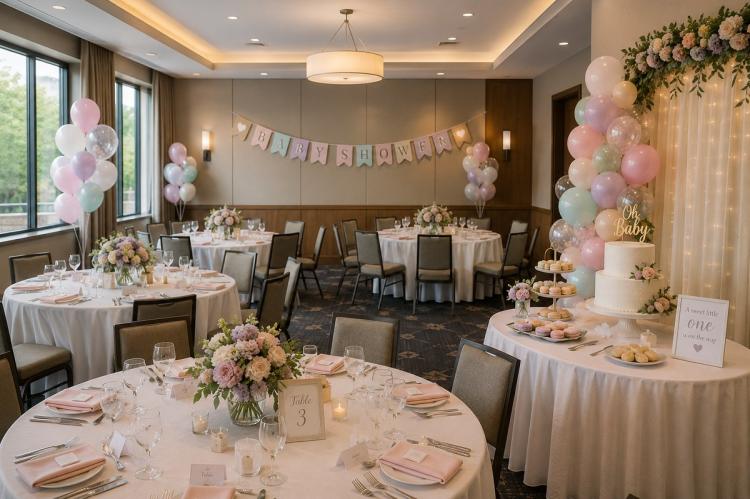
The venue decision follows the date and a rough headcount, and it needs making six to eight weeks before the shower. Popular rooms go sooner than hosts expect, and everything downstream — invitations, catering numbers, decorations — waits on it.
Most showers are held at somebody's home. Where that is not practical, the alternatives are more numerous than they first appear.
At home
The question is not whether the house is nice but whether it works for the number of people coming. Worth checking before committing:
- Whether the furniture can be rearranged to seat everyone, with surfaces left over for food, drink and a table for gifts
- Whether there is a comfortable chair that can sit where everyone can see it, for the guest of honour
- Parking, and how easily guests unfamiliar with the area will find the address
- Access — steps, narrow hallways and upstairs bathrooms matter for a heavily pregnant guest of honour and for older relatives
- Pets, and whether anyone attending has an allergy to them
- For remote guests joining by video, whether the internet connection is up to it
A home shower costs a fraction of a hired room and is easier to keep informal. The trade-off is that the host does the cleaning, the setting up and the clearing away, on top of everything else.
Outdoors
Gardens and parks suit larger guest lists and are worth considering in warm weather, with enough tables, seating and shade for the numbers expected.
The decision that matters is the wet-weather plan, and it needs making at the point of booking rather than on the morning. Either the space has indoor capacity for everyone, or there is a second location, or the marquee is hired in advance. A garden shower with no fallback is a gamble on the forecast.
Hired rooms
Where the house is too small, either the guest list comes down or a larger space is found. Both are legitimate, and the choice is easier once the budget is known.
The usual options are restaurant private dining rooms and function rooms above pubs, both of which handle the catering as well. Beyond those: church halls, community centres, village halls, sports and social clubs, and hotel function rooms. Many have kitchens that can be used, which brings the cost down considerably. For a shower organised by colleagues, a meeting room or the works canteen often does the job with no hire charge at all.
Online venue directories now list private rooms by city, area and capacity, with photographs and enquiry forms, which makes comparing options considerably quicker than ringing round.
What to agree in writing
A conversation with whoever handles private bookings should settle all of the following, and the answers should be confirmed by email rather than left verbal:
- The date, the arrival time, and how long the room is held — including how early setting up can begin
- The number of guests, and the deadline for confirming final numbers
- The menu, and whether dietary requirements can be accommodated
- Any minimum spend, and what counts towards it
- Whether a cake or drink brought in from outside is permitted, and whether corkage applies
- What decorations are allowed — many venues prohibit anything fixed to walls, and some prohibit balloons
- The deposit, and the cancellation terms
The last of these deserves particular attention for a shower held before the birth. Babies arrive early, and a venue that will move a booking is worth more than one that is slightly cheaper. The timing article covers what to plan for if the baby arrives first.
Where a deposit is required, paying it promptly is what actually secures the date. A separate cleaning deposit is sometimes charged on top where kitchen facilities are used, and is normally returned once the room is left as it was found.