Should A Baby Shower Be a Surprise?
A surprise shower can be a lovely gesture or an unwelcome one, and the difficulty is that the person planning it cannot simply ask. The judgement falls to whoever knows the guest of honour best.
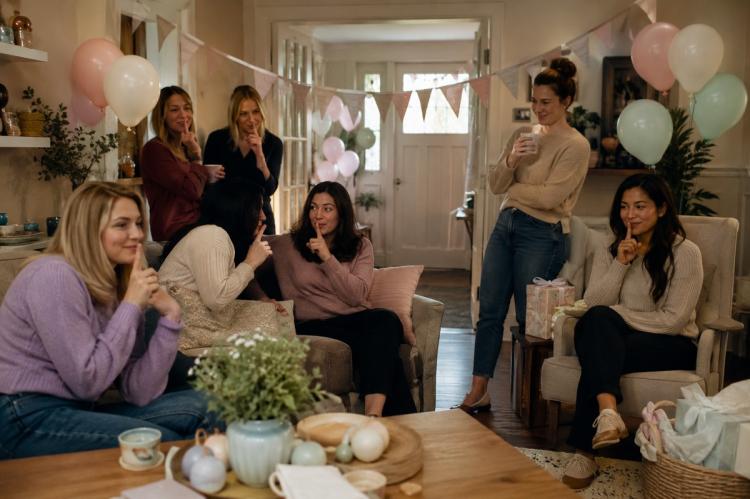
Every other decision about a baby shower can be put to the expectant parents. This one cannot, which is what makes it awkward. Asking whether a surprise would be welcome gives the surprise away, so the answer has to be inferred.
What makes a surprise work
The person best placed to judge is usually the host, or the small group of people closest to the guest of honour. Two things are worth weighing.
The first is temperament. Some people enjoy walking into a room of familiar faces; others find it genuinely uncomfortable and would rather have had the chance to prepare. Past reactions to surprise parties are the most reliable guide there is.
The second is how the pregnancy is going. Late pregnancy can be tiring and physically uncomfortable, and a plan built around getting someone to an unexpected location at a fixed time leaves no room for a bad day. Where a pregnancy is difficult or high-risk, a surprise is rarely the kind gesture it is meant to be.
A surprise is often easier to manage for a second or third baby, simply because it is less anticipated. First-time parents frequently expect a shower and may already be half-planning one in their heads.
The practical difficulties
A surprise shower asks the host to work without the information that normally makes a shower run smoothly.
There is no gift list, so guests buy blind and duplicates are common. Dietary requirements are unknown, as are any access needs among the guests the host has never met. The venue is chosen without knowing whether it is somewhere the guest of honour would have picked. None of this is fatal, but it does mean the host is guessing on several fronts at once.
The logistics need attention too. Someone has to arrange to be with the guest of honour and bring her to the venue at the right time, without an excuse so elaborate it collapses. Every guest needs telling that the event is a surprise, including a note about arriving discreetly — cars parked outside a house give the game away more often than anything else. And the guest list needs circulating among those who know her well, since the host planning in secret will inevitably miss someone.
The middle option
Most of the difficulty disappears with a partial surprise. The guest of honour knows the date and that something is happening, and settles the guest list and any gift list. Everything else — the venue, the theme, the decorations, the food, who has travelled to be there — stays hidden until the day.
This keeps the pleasure of arriving somewhere unexpected while removing the risk of an unwelcome ambush, a clash with an antenatal appointment, or an afternoon of duplicate presents. It also spares the host the hardest part of a full surprise, which is guessing at preferences that could simply have been asked about.
When nothing is hidden
A shower planned openly has one clear advantage: the guest of honour gets the shower she actually wants, down to the date, the venue and the food. The risk is the opposite one — that she ends up doing the organising, and arrives at her own celebration already tired. A host who takes the work while leaving the decisions avoids both problems. That division of labour is covered in Who should organise and host a baby shower?