Baby Shower Planning Tips
Almost everything that goes wrong with a baby shower goes wrong because something was left too late. These ten steps put the deadlines in order.
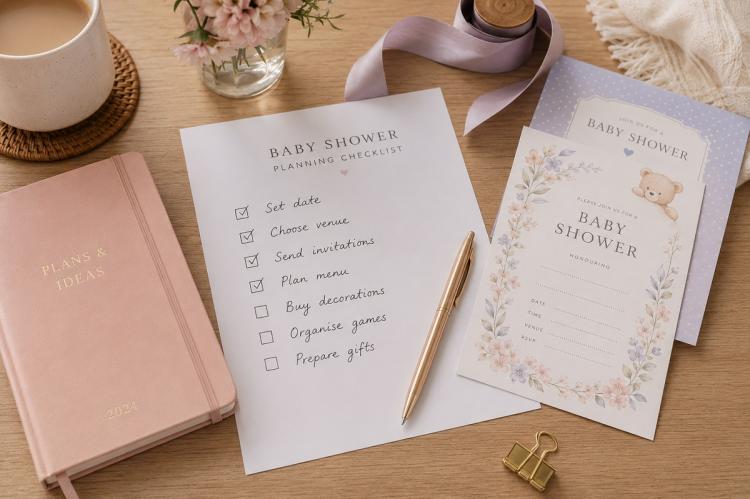
A baby shower is a straightforward event to plan, provided the sequence is right. The items below run roughly in the order they need attention.
Ten steps
- Build the guest list first. Names and addresses together, since the addresses are needed for invitations and again for thank-you notes. The list also determines the budget, because nearly every cost is per head.
- Set the date six to eight weeks before the baby is due. That falls comfortably inside the third trimester without running close to the due date. Where the pregnancy is difficult, or where there is any concern about early labour, eight to ten weeks ahead leaves more margin.
- Send invitations four to six weeks before the shower. Earlier for guests travelling a distance, or for a date near a bank holiday.
- Ask for replies one to two weeks before the day. A stated deadline produces replies; an open invitation produces a headcount on the morning.
- Book a restaurant or hired room early. Popular rooms go three to four weeks ahead, sometimes longer for weekend dates. Two things to establish at the time of booking: the latest date for confirming numbers, and whether any minimum spend applies.
- Order personalised favours at least three weeks ahead. Personalisation adds production time, and delivery adds more. Anything printed with a name or a date needs that margin.
- Plan the activities. Games matter most where guests do not know one another — colleagues, two sides of a family, friends from different periods of someone's life. A first game that gets people talking does more work than any decoration.
- Buy decorations in the last week. Balloons, flowers and anything perishable are better bought late than stored.
- Prepare the thank-you notes in advance. Cards bought and addressed from the guest list, ready to be written afterwards, spare the new parents a job at the worst possible moment. Where the shower has a theme, the cards can match it. Someone should also be given the job of writing down who gave what as gifts are opened, since that list is impossible to reconstruct later.
- Plan for the person, not the format. The guest of honour's temperament settles more than any checklist: whether games are welcome, how large the gathering should be, whether a theme suits her at all. The shower is held in her honour, and that is the test every other decision answers to.
Practices that differ by country
Baby showers took their modern shape in the United States, and several conventions that are near-obligatory there remain optional elsewhere.
Gift lists. In the United States a registry is expected, and its details commonly appear with the invitation. In Britain gift lists are widely used but not assumed, and contributions towards one expensive item — a pram, a cot — are more usual than a long list of smaller purchases.
Thank-you notes. American etiquette treats a written note after a shower as obligatory, which is why preparing the cards in advance is standard advice. British practice is looser, and thanks given in person or by message are generally accepted. Step nine is worth following either way, since addressed cards are easy to ignore and impossible to produce at short notice.
Favours. A small gift for every guest is standard at American showers and frequently skipped at British ones. Where the budget is tight, this is the line to cut first.
Scale. American showers tend to be larger, more themed and more likely to be held in a hired venue. British showers more often stay at home or take over a room in a pub or restaurant. Neither is more correct, but the difference explains why cost estimates vary so widely between sources.