Baby Showers for Adoptive Families
A shower welcoming a child who has been adopted works much like any other. The differences lie in the timing, in who is in the room, and in what happens to the photographs afterwards.
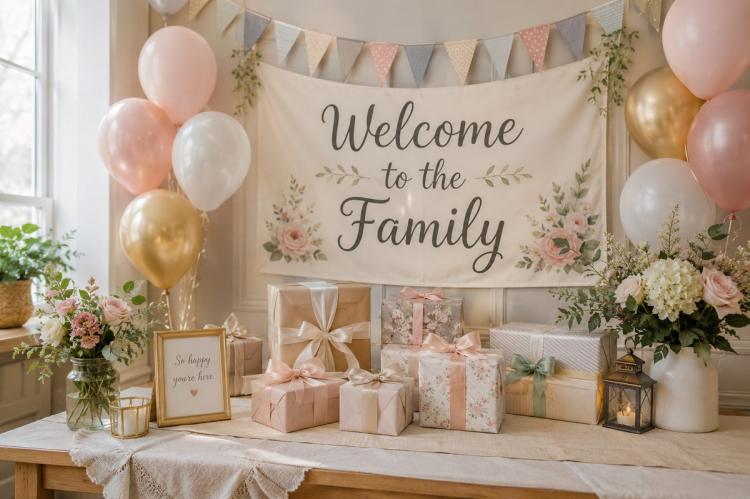
Adoption is a long process, and the point at which it is worth celebrating is not always obvious to friends and family who want to mark it.
Most of what applies to any baby shower applies here. Invitations, food, a cake, gifts, someone taking photographs, a comfortable chair for the guests of honour. The differences are worth understanding, but they are fewer than people expect.
Timing
The instinct to wait until everything is legally settled is understandable, and the process can stall or fall through. But the sequence in Britain does not put the legal ending first: the child moves in after a planned period of introductions, a settling-in period follows with social work support, and the application to court comes at least ten weeks after that. The adoption order arrives some time later again.
Waiting for the order can therefore mean waiting many months after the child is already home, by which point most of the practical help a shower provides has come too late.
The answer is to ask the parents rather than to apply a rule. Some want everything held back until the order is made. Others need the equipment before the child arrives, particularly for a first child, and would rather have it in good time. Both are reasonable, and the date matters far less than the celebration.
Settling in comes first
This is the one point where a shower can genuinely go wrong, and it applies most to a child old enough to notice.
A child who has recently moved into a new home has already had a great deal of change. The early weeks are given over to settling in and to building attachment to the new parents, and adoption workers commonly advise keeping visitors and new faces limited during that time. A room full of unfamiliar adults, however warmly meant, is a lot to ask of a child in their first weeks.
Where the shower falls in that period, the usual answer is to hold it without the child, or to keep it very small, or to wait. The parents and their social worker will know what is manageable. A host who asks first will get a straight answer.
Older children
Children of any age are adopted, and a celebration for an older child is closer to a party for that child than a shower for their parents.
Where the child is settled enough to take part, involving them in the planning helps — the food, the theme, who comes. Inviting other children makes it feel less like an adult occasion held about them. Themes chosen around the child's own interests work better than themes chosen around their age or their sex.
The thing to avoid is a format that makes the child the object of attention for an afternoon among people they have just met. Shorter is better than longer.
Gifts
For an infant, the usual list applies. For an older child, guests need telling what is actually useful, because the standard baby shower present will not be — clothes in the right size, books, something for their room, a contribution towards a bicycle or a bed.
Guests should ask the host or the parents rather than guess. The gift that helps a family who have been preparing for months is rarely the one that looks best in a shop.
Photographs and social media
This needs settling before the day, not afterwards.
Guidance for adoptive families in the UK is cautious about what goes online: advice from the UK Safer Internet Centre is not to post on social media that a child has been adopted or fostered, to avoid sharing daily routines, and to make sure friends and relatives know those rules too. Some placements carry specific conditions about identifying images.
For a shower, that means a private shared album rather than public posts, and the host saying so plainly when guests arrive. It is not an imposition on anyone, and it saves the parents having to ask people to take things down.
A word to guests
People mean well and still ask questions that are not theirs to ask: about the child's background, their birth family, why they were adopted, what it cost. A host who mentions beforehand that those subjects are private heads off most of it, and the parents are spared having to deflect the same question fifteen times at their own party.
The occasion is a welcome. That is all it needs to be.