London, Picadilly Circus
At the junction of Regent Street and Shaftesbury Avenue lies one of London’s most iconic landmarks, Piccadilly Circus. Known for its bustling energy and vibrant ambiance, this trapezoidal intersection near the West End remains a top destination for visitors and locals alike. Over the years, Piccadilly Circus has both preserved its historical charm and embraced modern advancements, making it a perfect blend of tradition and innovation.
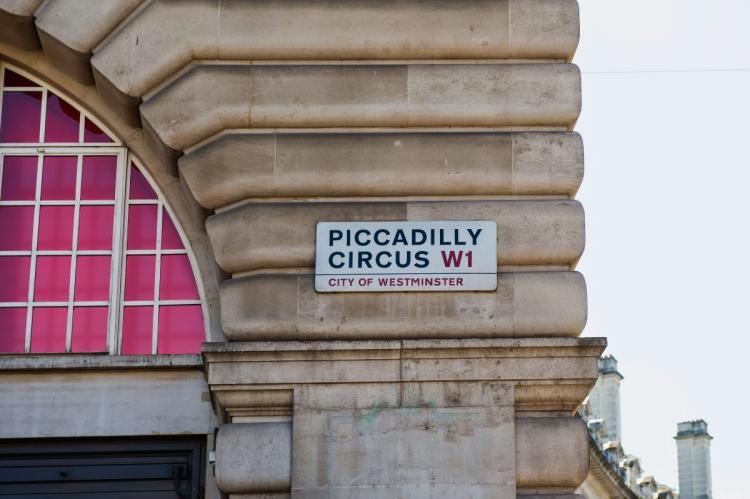
It's an odd name, since there's no circus there, but even odder is that "circus" usually denotes a round city area where several streets meet in a circle, after the Roman plan. That eccentricity fits Piccadilly, since this area of the great British capital attracts the most diverse set of people in an already diverse town.
The first half of the name comes from a frilly collar popular in the 17th century called a picadil. The name is a perfect description, for here are the frills of London. Here are pubs, monuments, shops and nearby theater in the West End. Akin to New York's Times Square, it's filled with traffic, crowds and, at night, neon lights befitting its role as a major tourist attraction.
Known already by 1743 by its current name, the junction was created in 1819 and its history shows. There's the bronze Shaftesbury memorial fountain topped by a statue of Anteros, the Angel of Christian Charity, often mistaken for Eros. This statue was technologically innovative when erected in 1893, as it was the first sculpture to be cast in aluminum. In the late 1980s, the fountain was moved from the center to its present location at the south west corner of the intersection to better accommodate the area's growing foot traffic..
The Evening Standard uses a graphic of the nude statue on its masthead.
Not far from the center, is the Criterion Theater, a historic West End theatre that has been entertaining audiences since 1874 and where the off-center (the literal translation of eccentric a Greek word) Reduced Shakespeare Company performed from 1995 to 2005. Their surrealistic show fitted in well with the ambiance of the area.
The Reduced Shakespeare Company no longer perform regularly at the Criterion Theatre. However, they continue to tour and perform their popular shows in various venues around the world.
Their specialty is the rapid, highly improvised, presentation of the complete works of Shakespeare in 97 minutes.
For those interested in more traditional forms of theater the London West End shows are only a few minutes walk. Here you can see the best of British theater, shows which often are later imported to Broadway.
On the northeastern side, is the London Pavilion. First erected in 1859 as a music hall, Shaftesbury Avenue bisected the site in 1885. A new building for the purpose was built and by 1923 was even lit with electric billboards. Rebuilt in 1986, the original 1885 facade was preserved and the area converted to a shopping arcade. Later it was connected to the neighboring Trocadero Centre.
The role of Picccadilly Circus as London’s “Times Square” has been further amplified by the illuminated advertisements that have graced its skyline the early 20th century. The famous curved LED screens of Piccadilly Circus, known for their dazzling advertisements, have been regularly updated with the latest technological advances. These screens are now fully digital and feature interactive capabilities, offering dynamic visuals and creative brand campaigns that captivate visitors day and night. The area blends historical architecture with cutting-edge innovation, perfectly encapsulating the spirit of modern London.
Piccadilly Circus remains one of London’s top cultural and commercial hubs. Surrounding streets are home to world-class theatres, including the Criterion Theatre, and vibrant retail spaces. The area’s evolution continues with new shopping arcades, cultural events, and public art installations, notably enhancing its appeal to tourists and locals alike. Historic retailers like Lillywhites, established in 1925, still thrive here alongside modern brands, offering diverse choices for shoppers.
Today, Piccadilly Circus is undergoing a major transformation as part of a collaborative project by Westminster City Council and The Crown Estate. This “once-in-a-generation” initiative aims to make the area more sustainable, inclusive, and adaptable while preserving its heritage. Key changes include creating pedestrian-friendly spaces, enhancing connectivity, and incorporating urban greening. These efforts are guided by public feedback gathered in consultations throughout 2023 and beyond.
One of the main goals is to prioritize the experience of pedestrians. Plans include planting more greenery to create inviting spaces and minimizing vehicular impact to reduce pollution. Additionally, the designs will celebrate Piccadilly's history while ensuring it remains relevant to the needs of an evolving city. Public engagement will continue till mid-2026, with each stage shaping a safer, more welcoming public space.
This storied landmark is no mere relic of the past, it’s a living, evolving part of London. The ongoing renovations aim to ensure that it remains an essential part of the city’s identity for generations to come. By balancing its heritage with cutting-edge design and sustainable practices, this transformation will reflect the area’s enduring legacy while securing its place as a global icon.
Piccadilly Circus continues to represent London’s eclectic mix of history, culture, and progress. Whether exploring its past or looking forward to its bright future, it stands as one of the best examples of London’s ability to innovate while celebrating its heritage.