Chrome or brass? The metal question in contemporary interiors
Some forecasts name chrome the finish of the moment; others insist warm metals still hold the room. Both are describing something real, and the contradiction is easier to resolve than it looks.
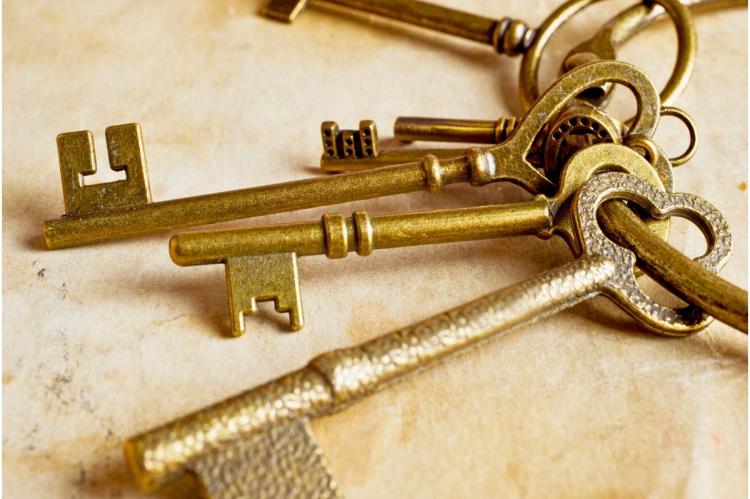
Anyone choosing a lamp, a set of handles or a tap at the moment will have encountered two confident and opposing pieces of advice. Chrome is back, having displaced a decade of warm brass. Or brass remains the safe specification and chrome is a passing novelty for people who enjoy risk.
Both claims appear in reputable coverage, often within the same month. The disagreement is not really about which metal is correct. It arises because two separate revivals are running at the same time, and the metals belong to different ones.
Two revivals, two metals
Brass sits with the Art Deco revival, and with the broader warm, enveloping direction that has shaped British interiors for several years. It suits geometry, jewel tones and lacquered surfaces, and it belongs naturally to the palette of warmer neutrals that has replaced cool grey.
Chrome's return has a different lineage. Most of it traces not to the 1920s but to the middle of the last century — the tubular forms, curved frames and space-age references of the 1950s through the 1970s. That revival is running on its own track, alongside burl wood, rounded silhouettes and high-gloss finishes, and it has arrived on the British high street with some force. Habitat has committed to it particularly visibly across seating and bedroom furniture.
Coverage that treats chrome as the Deco metal collapses these two movements together, which is where much of the confusion originates. Chrome does appear in Deco schemes, and always has. But the current wave of chrome furniture is a mid-century story wearing a Deco label.
The practical consequence is that neither metal is displacing the other. Both are widely available, both are being specified, and the question worth asking is not which is right but which suits the room.
What chrome does to a space
Chrome reflects. It bounces light around a room, which makes small or dark spaces feel larger, and it reads as clean and precise rather than decorative. Against pattern and texture it provides relief; against minimal schemes it supplies the single point of interest.

The objection to it is equally real, and worth stating rather than glossing over. Chrome is cool, and in quantity it can read as clinical. When Habitat launched a chrome-framed bed, the reaction split sharply — admiration for the form on one side, and on the other the observation that a tubular metal frame sits awkwardly beside the upholstered, cocooning headboards that have dominated bedrooms recently. Design commentators noted the same tension: the finish appears to run directly against the softness that has defined the room for several seasons.
That tension is the useful information. Chrome works where a scheme has enough warmth elsewhere to absorb it — timber, wool, clay, plaster. In a room already leaning cool, grey or hard-surfaced, it compounds the problem rather than solving it.
What brass does to a space
Brass absorbs light rather than throwing it back, which is why it reads as warm even in small quantities. It flatters the browns, greiges and clay tones currently displacing cool grey, and it carries Deco geometry without effort.
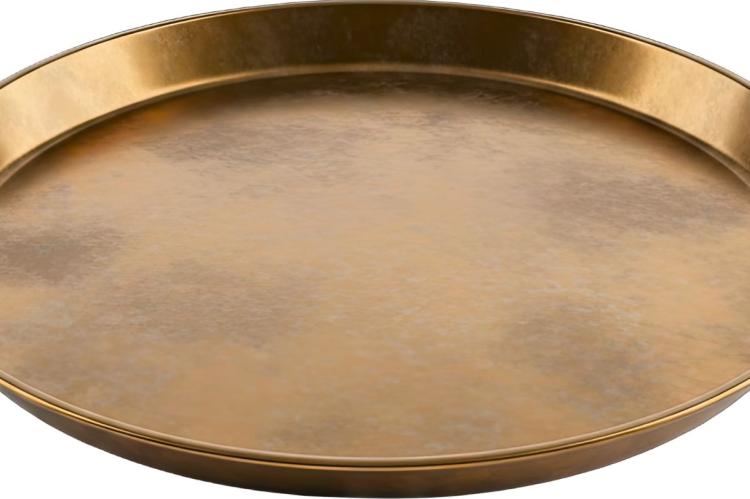
The important distinction with brass is not against chrome but within the category itself. Bright polished brass, brushed satin brass and antique or aged brass produce entirely different effects, and an unlacquered finish will darken and mottle with handling over years. That patina is either the appeal or the problem, depending on the room and the expectation. Lacquered brass holds its original colour but never develops the depth.
For most schemes the choice between brass finishes matters considerably more than the choice between brass and chrome.
Combining the two without it looking accidental
Mixed metals only look deliberate when one of them is clearly in charge. The workable approach is to establish a dominant finish that accounts for the large majority of the metal in a space, and introduce the second as a deliberate minority — roughly a seventy-thirty split, though the proportion matters less than the clarity of the hierarchy. Two metals in equal measure reads as indecision.
Consistency operates by sightline rather than by house. A kitchen and a bathroom on separate floors can take different dominant metals without any sense of conflict. A single open-plan room cannot.
Which finish takes the dominant role is usually settled by cost rather than taste. Fixed elements — taps, door handles, radiator valves, cabinet hardware — are expensive and disruptive to change, so whatever is already installed sets the baseline. Lighting, mirror frames and accessories are where the second metal enters, because those are the pieces that can be swapped without a trade or a weekend.
Both finishes benefit from the same companions. Wood, ceramic, stone and textile all soften metal and prevent either from dominating. A chrome lamp base on a timber console with a neutral shade reads as considered; the same lamp on a glass table in a grey room reads as cold. Retailers have been demonstrating the principle plainly enough — chrome-framed seating has recently appeared upholstered in deep chocolate brown, which is about as clear an illustration as the pairing of a cool frame with a warm surface can get.
Black is the third option often forgotten in this conversation. Matte black behaves as a cool metal for the purposes of mixing, and combines more easily with chrome than with brass.
Where to start, and where to be careful
Chrome carries more risk at scale than brass does, simply because it is the less established of the two. A reflective vase, a lamp base, a picture frame or a small mirror introduces the finish for very little commitment, and reveals within a week whether the room takes it. Chrome furniture — a bed frame, a dining set, a large storage piece — is a substantially larger bet, and one better made in a room with strong natural light and plenty of soft material already present.
Brass is safer at any scale, which is precisely the argument against it for anyone seeking something that does not look like every other recently decorated house.
Neither answer is wrong. The rooms that fail are the ones where the metal was chosen from a forecast rather than from the space it had to sit in.